Rapid and Automated Peptide Mapping of Protein Therapeutics

Instrumentation
Mass Spec: Thermo Scientific Orbitrap® Instruments
Sampling: TriVersa NanoMate LESA®
Authors
Josh Coon, PhD
University of Wisconsin-Madison and CeleramAb™
Daniel Eikel, PhD
Advion Interchim Scientific®
Introduction
In contrast to small molecule drugs, biologics (or protein therapeutics) such as antibodies can be very powerful drugs because they target biological pathways with much higher specificity thereby enabling treatment of complex diseases such as cancer, autoimmune disorders or metabolic conditions and reducing unwanted side effects at the same time. Precise characterization of these biologics – including their structure, post-translational modifications, stability, and activity—is essential to ensure their safety, efficacy, and consistency across production batches. Even small changes in protein folding caused, for example, by a chemical modification on one amino acid can diminish a protein therapeutics’ function or worse, trigger unwanted immune responses. Rigorous analytical methods therefore guide optimal design, manufacturability, and quality control. Accurate characterization also supports regulatory approval and helps identify biomarkers or mechanisms that improve therapeutic performance and patient outcomes.
Here we describe a protein/antibody characterization approach based on standardized enzymatic digestion in 96 well plates, the rapid injection of the generated peptides into high resolution mass spectrometers and subsequent automated data analysis for full protein sequence characterization of up to 1000 mAbs a day (Figure 1).
Advion Interchim Scientific® Systems


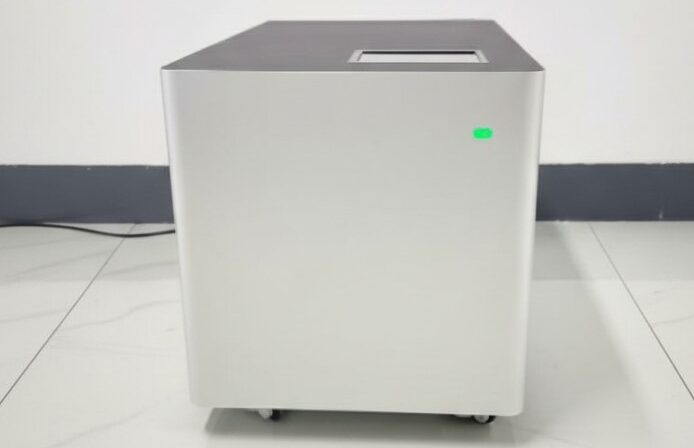
TriVersa NanoMate LESA® with ESI Chip® Technology

Figure 1: Combining the technology from CeleramAb™ and Advion Interchim Scientific® to create a protein therapeutic analysis approach based on enzymatic protein digestion, direct infusion MS, MS/MS and automated data processing to achieve a 1000 mAbs throughput a day.
Concepts & Experiments
Protein therapeutics can degrade based on various factors such as time, pH changes, light or heat exposure causing changes to amino acids along the peptide sequence of the biologic drug, changes like deamidation, oxidation or pyrolization, which may cause folding and function changes. Figure 2 depicts typical changes observed on an antibody. Other changes in the glycosylation, phosphorylation or Cys-Cys oxidation state will also impact the folding and function of a biologic. All these modifications must therefore be investigated, characterized and ultimately routinely maintained and controlled to generate a valuable new drug.
Figure 2: Protein therapeutics can degrade based on various factors such as time, pH changes, light or heat exposure causing changes to amino acids along the peptide sequence of the biologic drug, changes like de-amidation, oxidation or pyrolization.
A typical way to analyze protein sequences is the enzymatic digestion of the protein to its peptide building blocks and their respective analysis in LC-MS/MS. The chromatography separates the peptides in time and mass spectrometry allows the mass spectral analysis of the peptides generating fragmentation ions and therefore sequence information. Historically, such LC-MS/MS runs took a long time, with 30-120 minutes being typical run times, and required extensive off-line data analysis to show complete sequence coverage and characterization of the protein. Both these factors severely limited the number of samples that could be processed in a day and indirectly limited the number of attempted experiments with therapeutic proteins.
Instead of time-consuming LC-MS/MS, we present an approach utilizing direct infusion (DI) mass spectrometry in an automated fashion. This approach has become viable since modern mass spectrometers have a much higher cycle time to run MSn experiments and allow for high mass accuracy and high mass resolution for unequivocal assignments of peptide sequences and modifications directly from the MS data. Development of an automated ion source based on ESI chip® technology provides consistent and highly efficient nano ESI ionization using a sample path of one sample, one tip and a new nESI emitter for every consecutive sample – eliminating cross contamination entirely. As shown in Figure 3, this approach utilizes standardized reagents in a 96 well format for the enzymatic digestion of antibodies following reproducible protocols, and the NanoMate Triversa automated robotic sample infusion system to ionize the generated peptides and analyze them in the mass spectrometer to generate information rich mass spectra of every sample in just one minute. Data processing is also automated with customized software to address both described bottlenecks above, resulting in a throughput of up to 1000 samples a day.
Figure 3: Schematic of the peptide mapping workflow based on standardized antibody digestion of the protein therapeutic in 96 well plates, rapid and automated direct infusion high resolution mass spectrometry to generate information rich MS data (data is automatically processed for a throughput of 1000 mAbs a day).
Experimental Setup & Methods
Figure 4 shows a typical set of experiments with this Direct Injection – MS/MS (DI-MS/MS) approach. Here, two different samples (Antibody X and a NIST standard antibody) were tested for stability under heat and pH changes in triplicate.
After standard digestion, the samples were injected into the MS system as described and the raw MS data is shown. In a little over one hour, 42 samples covering the stability experiment and controls were analyzed. On the time line you can see bursts of MS data intensity for each of the 1 min infusion experiments followed by periods of no data (reflecting the time the robot takes to bring the next sample to the MS system). This one hour is roughly the same time frame typically consumed for only one sample in a traditional LC-MS approach.
Example analysis of the peptide DTLMISR illustrates the work flow. Figure 5 shows the MS data of an oxidized methionine amino acid in the peptide sequence DTLM(ox)ISR of a therapeutic antibody. A typical LC-MS analysis approach would require 30-120 min to separate the protein digest followed by manual data inspection. However, the DI-MS/MS based approach only requires a 1 min run time with both related peptides (native and oxidized state) separated in the gas phase by their mass-to-charge ratio and detected by an automated mass shift algorithm. Calculations of the oxidation state is determined by ion intensity and calculated to 19.6% oxidation, which is in perfect agreement with the LC-MS result – however, the information is obtained in a fraction of time.
Figure 4: Example of a sample sequence with 14 samples run in triplicate within a little over one hour. Both proteins (antibody X and a NIST standard mAb) were exposed and tested against various conditions (pH and temperature). Each run represents 1 min infusion MS data collected for further processing and peptide identification and modification analysis.


Figure 5: Example data analysis of an oxidized methionine amino acid in the peptide sequence DTLMISR of a therapeutic antibody. Typical LC-MS/MS analysis approach would require 30-120 min to separate the protein digest followed by manual data inspection. However, the Direct Infusion-MS/MS based approach only requires a 1 min run time with both related peptide sequences separated in the gas phase and detected by an automated mass shift algorithm. Calculations of the oxidation state is determined by ion intensity and calculated to 19.6% oxidation, which is in perfect agreement with the LC-MS/MS result – however the information is obtained in a fraction of time.
Conclusion
The Advion Interchim Scientific® TriVersa NanoMate® automated ion source is the perfect tool to support high throughput workflows in the characterization of therapeutic proteins based on peptide mapping strategies. In combination with the CeleramAb™ standardized reagent kit, mass spectrometry run methods and automated analysis software tools we can achieve a throughput increase by a factor of 100 compared to standard LC-MS approaches resulting in up to 1000 mAbs analyzed in a day.
BCCE 2026
NESACS MatChem’s Biomaterials Symposium
Flash Purification of Carbohydrates with puriFlash® 5.030 and Integrated ELSD

Instrumentation
Flash chromatography system: puriFlash® 5.030 with pack iELSD
Column: puriFlash® 50µm NH2 F0025
Author
Applications Team
Advion Interchim Scientific
Introduction
Carbohydrates are non-chromophoric compounds that often lead to flat signals when using UV detection only. In this application note, we show carbohydrate purification with ELSD and how such detection can help in purification.
Why use ELSD from Advion Interchim Scientific?
-
- Detect chromophoric and non chromophoric compounds as carbohydrates
- Low maintenance with Isopropanol make-up solvent for ELSD
- IPA push the sample to the ELSD
- System cleaning meanwhile processing to purification => almost maintenance freeAutomatic refill
- Eliminates risk of signal saturation or non-detection
- Allow to detect and collect low concentration compounds
- Easy set up (no parameters to predict, easy to use)
- Automatic gain to clearly see all compounds at the same time (Figure 1)
- Low sample consumption 40µL/min
- ELSD is a destructive detection mode, thank to automated spliter quantity send to detector is control
- Low gas consumption (1 – 1.5L/min at 1-1.5bar)
- Low temperature technology

Figure 1: Automatic gain allows users to clearly see all compounds at the same timeMethod
Experimental Set Up
Flash chromatography system: puriFlash® 5.030 with pack iELSD
Column puriFlash®: 50µm NH2 F0025
Sample: D(-)Fructose 100mg
Alpha (D)-Lactose 100mg
Detector: ELSD 35°C
UV: 254nm
Results & Discussion
ELSD Signal

Figure 2: ELSD showing a good signal intensity and smoothing.UV Signal 254nm

UV Signal SCAN 200-800nm

Figure 3 & 4: Compounds are not visible with UV. Scan start to show low intensity for the first compounds, but not enough to get good collection.
Conclusion
Carbohydrates are non-chromophore compounds and can’t be detected by UV, it is necessary to use ELSD detector that provide good detection.The ELSD detector that AIS propose is capable of provide several benefits for user:
- no need to define gain depending on the loading
- Thanks to low temperature technology, it is possible to look more compounds (especially temperature sensitive or volatile)
- In this application we used water and 35°C was enough to remove water response and get flat signal.
Advanced Arsenic Speciation In Water Using HPLC-ICP-MS

Instrumentation:
ICP: SOLATION® ICP-MS
LC: AVANT® (U)HPLC
Author:
Dr. Fadi Abou-Shakra
Advion Interchim Scientific®
Introduction
Arsenic (As) is a toxic element found in various environmental matrices, including water, soil, and food. The toxicity of arsenic is highly dependent on its chemical form. Inorganic arsenic is a particularly toxic form of arsenic that is often found in water sources, posing significant health risks such as skin lesions and cancer. Therefore, accurate detection and quantification of inorganic arsenic species are crucial for ensuring water safety and compliance with regulatory standards. HPLC-ICP-MS is a very powerful analytical tool for performing such analyses.
HPLC-ICP-MS combines the separation capabilities of HPLC with the sensitive detection of ICP-MS. HPLC separates arsenic species based on their chemical properties, while ICP-MS detects and quantifies these species with high sensitivity and precision.
The Advion Interchim Scientific speciation solution offers several key features that assist the end user in developing robust HPLC-ICP-MS methods including:
1. A fully integrated software that controls both the SOLATION® ICP-MS and the AVANT® HPLC system. In addition, the ICP-MS Express software allows for the control of a UV-DAD detector for real time review of ICP-MS and UV data permitting the end user to troubleshoot any chromatographic issues during method development.
2. Advanced quantitation routines such as a built in speciated isotope dilution routines for ultimate accuracy and semiquantitative calculations to report on the concentration of unknown species.
3. Simplified data review: that allows on the fly changing the peak integration parameters, speeding up the process of method development.
4. Flexible reporting allowing for the easy generation of reports and simplifying data export to integrate with LIMS or other lab data systems.
5. Automated column switching for multi-element speciation analysis to allow for sequential unattended analysis of different sample batches.
Methodology
Inorganic arsenic species in the form of solid As(III) oxide and As(V) oxide as well as ammonium dihydrogen phosphate were obtained from Oakwood Chemicals, USA. The separation of the 2 species of As was conducted on an Advion Interchim Scientific® C18 column, Uptisphere strategy 100A, particle size 5 µm, length 250 mm and ID 3 mm. The mobile phase consisted of 5 mM ammonium dihydrogen phosphate, 0.05 % acetonitrile adjusted to pH 2.6.
Separation and Results
Figure 1 shows the separation of the two inorganic arsenic peaks together with the response from an internal standard spike injected to correct for potential drift after time. The impact of using the spike to normalize the signal on the long-term stability of the analysis is highlighted in Figure 2.

Figure 1: The separation of As(III) and As(V) using a C18 column.
The long-term stability of the separation is assessed using two variables, the peak area and the retention time of the eluted peaks.
Figure 2 the stability of the peak area of 1 ppb As(V) over 4 hours with and without normalization. Although the long-term stability for 50 µL injections of 1 ppb As(V) over 4 hours was < 10%, normalizing the signal by ratioing it to the peak area of the injected spike improved that precision to less than 3%.

Figure 2: Stability of the peak area for 1 ppb As(V) over 4 hours of analysis. An upward drift in response could be seen on the graph (orange squares) that was successfully corrected for using an internal standard (blue diamond).
On the other hand, looking at the stability of the retention time as shown in Figure 3, we can clearly see that the peaks retention time did not drift over the 4 hours period of analyses.

Figure 3: Stability of the retention time for As(V) over 4 hours with and without internal standard, no drift could be detected.
In order to establish the detection limit of the method, Figure 4 shows the peak list generated by the software listing the peaks and the relevant S/N ratio. With a signal to noise ratio 112 for 1 ppb As(V) this translates to < 30 ppt detection limits based 3 x the S/N ratio.

Figure 4: Peak list generated from 1 ppb As(V) and 0.25 ppb As(III) showing great S/N ratios and highlighting the detection power of the system.
Conclusion
HPLC-ICP-MS is a vital technique for arsenic speciation, providing accurate and reliable data essential for environmental and food safety assessments. In this application brief we demonstrated the ability of the speciation solution using the SOLATION® ICP-MS. A repeatable and dependable separation was achieved and detection limits in the ppt range could be easily attained. The fully automated capability of the system allows the user to run the samples unattended and process the data/generate reports with minimal intervention.
Efficient Reaction Monitoring with Advion Interchim Scientific ASAP-CMS for Compounds Requiring Polarity Switching in Medicinal Chemistry

Instrumentation:
Mass Spec: expression® CMS
Sampling: Atmospheric Solids Analysis Probe – ASAP®
Software: MassExpress
Authors
Changtong Hao, Ph.D.
Advion Interchim Scientific
Introduction
In medicinal chemistry, rapid and reliable analytical techniques are crucial for the discovery of new drug products. Mass spectrometry (MS) is a key technique for reaction monitoring that provides essential molecular information about a product at each stage of discovery.
Medicinal chemists often encounter specific challenges when monitoring reactions, such as:
– Ionization Mode Ambiguity: The lack of prior information on the optimal ionization mode (positive or negative) can lead to incomplete data.
– Developing separate methods for each ionization mode may delay progress in a fast-paced field that demands quick insights.
– Limited access to specialized instruments or expertise can also hinder analysis.

Advion Interchim Scientific System
expression® CMS with Atmospheric Solids
Analysis Probe (ASAP®)
Method
The Advion Interchim Scientific® Atmospheric Solids Analysis Probe (ASAP®), integrated with the expression® Compact Mass Spectrometer (CMS) and MassExpress software, uses rapid polarity switching and versatile sample introduction techniques to offering an innovative solution to these challenges:
Rapid Polarity Switching: Seamlessly transitions between positive and negative ion modes, ensuring comprehensive data capture without method changes.
Versatile Sample Introduction: Atmospheric Solids Analysis Probe (ASAP®) enables direct analysis of solid and liquid samples, reducing preparation time.
Enhanced Data Integrity: Accurate identification of compounds with distinct ionization preferences minimizes the risk of missing critical information.
Here is the case where chemist cannot get a successful detection with their traditional LC-MS analysis of the reaction Monitoring with Dual Polarity Detection.
Scenario: Differentiating between a reactant and its product, each exhibiting exclusive ionization behavior.
Reactant (C5H2Br2O2S): Detectable only in negative ion mode, showing peaks at m/z 282.8, 284.8, and 286.8 displaying a characteristic 1:2:1 bromine isotopic pattern.
Product (C6H4Br2O2S): Undetectable in negative ion mode but clearly observed in positive ion mode at m/z 298.8, 300.8, and 302.8, also displaying the same classic 1:2:1 bromine isotopic distribution.

Figure 1: Reaction Path

Figure 2: A top). MS spectrum of starting material in negative mode. B bottom). MS spectrum of product in positive mode.
Using the Advion Interchim Scientific’s ASAP-MS’s rapid polarity switching feature, both compounds were accurately identified within a single analytical workflow and without the need of HPLC separation. Total elapsed time of the analysis was <1 minute for the samples and this technique allows the reaction to be monitored over time.
Conclusion
The Advion Interchim Scientific® ASAP-MS, with its rapid polarity switching and efficient and versatile sample introduction via the Atmospheric Solids Analysis Probe (ASAP®), empowers medicinal chemists to monitor reactions with confidence. The robust system ensures that no critical data is overlooked, streamlining drug discovery workflows and enhancing decision-making processes. Harness the power of dual polarity detection with Advion Interchim Scientific® ASAP-MS—because every detail matters in the mission of drug discovery.