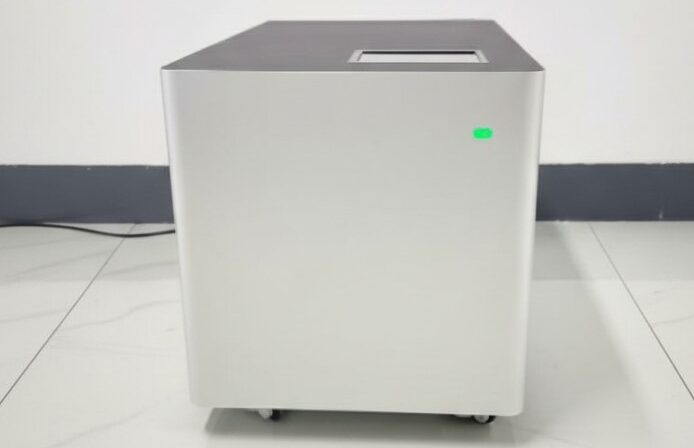
In this Lab Manager webinar, Dr. Daniel Eikel, Advion Director of Product Applications and Customer Service reviews the use of the Advion expression Compact Mass Spectrometer (CMS) for food and beverage analysis.
As an attendee, you will learn more about:
How leading technologies and techniques affect food science researchers
How to establish workflows that optimize the efficiency of your food science lab
New and novel applications in the field of food and beverage science
USDA Cornell University, Federal University of Viçosa
Abstract
This study assessed and compared the effects of the intra-amniotic administration of various concentrations of soluble extracts from chia seed (Salvia hispanica L.) on the Fe and Zn status, brush border membrane functionality, intestinal morphology, and intestinal bacterial populations, in vivo. The hypothesis was that chia seed soluble extracts will affect the intestinal morphology, functionality and intestinal bacterial populations…This study demonstrated that the intra-amniotic administration of chia seed soluble extracts increased (p < 0.05) the villus surface area, villus length, villus width and the number of goblet cells. Further, we observed an increase (p < 0.05) in zinc transporter 1 (ZnT1) and duodenal cytochrome b (Dcytb) proteins gene expression. Our results suggest that the dietary consumption of chia seeds may improve intestinal health and functionality and may indirectly improve iron and zinc intestinal absorption.
Analysis was performed by LC/MS using the Advion expression Compact Mass Spectrometer (CMS).
USDA-ARS, Cornell University, Michigan State University
Abstract
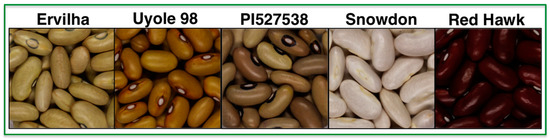
The common dry bean (Phaseolus vulgaris L.) is a globally produced pulse crop and an important source of micronutrients for millions of people across Latin America and Africa. Many of the preferred black and red seed types in these regions have seed coat polyphenols that inhibit the absorption of iron. Yellow beans are distinct from other market classes because they accumulate the antioxidant kaempferol 3-glucoside in their seed coats. Due to their fast cooking tendencies, yellow beans are often marketed at premium prices in the same geographical regions where dietary iron deficiency is a major health concern. Hence, this study compared the iron bioavailability of three faster cooking yellow beans with contrasting seed coat colors from Africa (Manteca, Amarillo, and Njano) to slower cooking white and red kidney commercial varieties. Iron status and iron bioavailability was assessed by the capacity of a bean based diet to generate and maintain total body hemoglobin iron (Hb-Fe) during a 6 week in vivo (Gallus gallus) feeding trial. Over the course of the experiment, animals fed yellow bean diets had significantly (p ≤ 0.05) higher Hb-Fe than animals fed the white or red kidney bean diet. This study shows that the Manteca yellow bean possess a rare combination of biochemical traits that result in faster cooking times and improved iron bioavailability. The Manteca yellow bean is worthy of germplasm enhancement to address iron deficiency in regions where beans are consumed as a dietary staple.
Analysis was performed by LC/MS using the Advion expression Compact Mass Spectrometer (CMS).
Volatile Atmospheric Pressure Chemical Ionization (vAPCI) combined with Advion Interchim Scientific’s expression® compact mass spectrometer (CMS) is a fast and easy method to analyze the headspace of a sample with no additional sample prep.
The vAPCI ion source is a simple, powerful tool for gas phase sample analysis. The technique can quickly and confidently identify compounds in air, breath, headspace and other gas samples.
Direct sample analysis of liquids, solids and powders without chromatography is as easy as it sounds, and provides mass spectral information within seconds. The video demonstrates analysis of a reaction mixture.
Advion Interchim Scientific’s Plate Express® is ideal for fast, easy TLC/MS analysis. Coupled with the expression® Compact Mass Spectrometer (CMS), the TLC plate reader allows prep-free sampling and data in less than 30 seconds.
Advion’s direct atmospheric solids analysis probe, otherwise known as ASAP®, permits chemists fast and reliable sample analysis of liquid and solid samples such as reaction mixtures, food samples, natural products and tablets.
We demonstrate a cost-effective UHPLC/CMS method for the analysis of chloramphenicol in milk with a detailed discussion of sensitivity, linear response range, carryover and robustness using the Advion expression® Compact Mass Spectrometer (CMS) and Advion AVANT™ UHPLC System.
This application note was adapted from a poster that was presented at the 2019 ASMS Conference on Mass Spectrometry and Allied Topics in Atlanta, GA.
We demonstrate a cost-effective UHPLC/CMS method for the analysis of chloramphenicol in milk with a detailed discussion of sensitivity, linear response range, carryover and robustness using the Advion expression® Compact Mass Spectrometer (CMS) and Advion AVANT™ UHPLC System.
This poster was presented at the 2019 ASMS Conference on Mass Spectrometry and Allied Topics in Atlanta, GA.
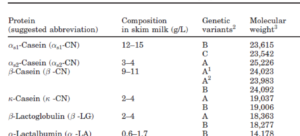
In this application note, the Advion Interchim Scientific® AVANT™ UHPLC/CMS system is used to analyze casein proteins in whole milk extract to separate and detect β-casein-B, -A1, and -A2, as well as K-casein and αs1-casein variants. This method is also suitable for a quick, relative quantitation of the β-casein-B, -A1, and -A2 variants in standards of β-casein.