Abstract
The equilibrium dissociation constant (Kd) is a quantitative measure of the strength with which a drug binds to its receptor. Methods for determining Kd typically require a priori knowledge of protein concentration or mass. We report a simple dilution method for estimation of Kd using native mass spectrometry which can be applied to protein–ligand complexes involving proteins of unknown concentration, from complex mixtures, including direct tissue sampling.
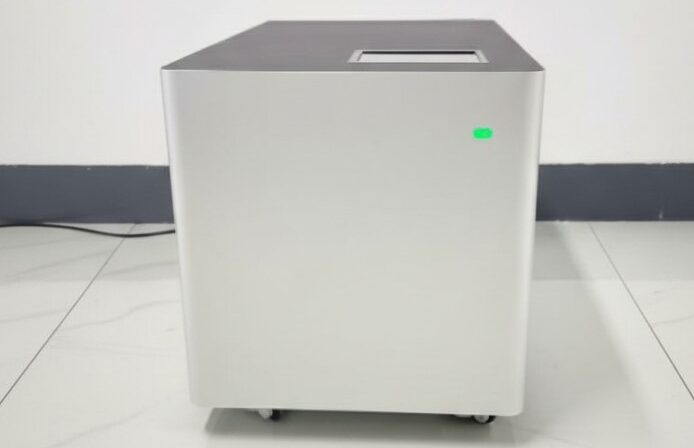
Advion Interchim Scientific® TriVersa NanoMate® (Advion, Ithaca, NY) was utilized.
Abstract
Alzheimer’s disease (AD) poses a significant global health burden, underscoring the need for early and accessible biomarkers to enable timely diagnosis and intervention. Lipids, which constitute over half of the brain’s mass, play essential roles in numerous cellular processes, and their dysregulation has been increasingly implicated in AD pathophysiology. In this study, we performed lipidomic profiling of hippocampal samples derived from individuals at different Braak stages and plasma samples from patients with mild cognitive impairment (MCI), AD, and healthy controls. Parallel analyses were conducted in 5xFAD transgenic mice and wild-type littermates. Our results revealed lipid alterations across central and peripheral compartments in both human subjects and the 5xFAD mouse model. Notably, specific lipid changes identified in particular lipid species at early/mild Braak stages or in MCI persisted into advanced stages of the disease, highlighting the systemic nature of lipid dysregulation in AD and supporting the potential of these lipid signatures as diagnostic and prognostic biomarkers.
Castroflorio E, Cabot J, Miralles M, Suau-Fullana M, Peter M, Balogh G, Torok Z, Rodríguez E, Sanchez-Juan P, Férnandez-García P, Llado V, Escribá PV, Torres M: Lipidomic Analysis of Human Plasma and Hippocampus Across Alzheimer’s Progression and Preclinical 5xFAD Mouse Model. Mol Neurobiol. 2026 Apr 13;63(1):561
doi: 10.1007/s12035-026-05849-1. PMID: 41974986; PMCID: PMC13076374.
Advion Interchim Scientific® TriVersa NanoMate® (Advion, Ithaca, NY) was utilized.
Abstract
Histones variant composition and post-translational modifications (PTMs) of core and linker histones jointly orchestrate chromatin architecture and tissue-specific gene regulation. However, capturing the full complexity of the “histone code” in native human tissues remains challenging. Here we present a human cardiac histone proteoform atlas-comprising intact histone variants with combinatorial PTMs-enabled by a streamlined top-down proteomics workflow. In a single one-dimensional reversed-phase liquid chromatography (LC)-mass spectrometry (MS) run, we achieve baseline separation of all four core histone families (H2A, H2B, H3, and H4) together with the linker histone H1 directly from human myocardium. Notably, this intact-protein analysis preserves the connectivity of co-occurring PTMs to individual histone molecules to reveal the combinatorial histone code, enabling proteoform-level quantification of histone-variant composition and PTM stoichiometry at the chromatographic scale. Targeted MS/MS directly resolves co-occurring PTM combinations and distinguishes highly homologous histone isoforms. Using this approach, we assemble the first comprehensive cardiac histone proteoform atlas and uncover previously unobserved histone proteoforms. More broadly, this top-down proteomics workflow provides a robust framework for proteoform-resolved analysis of histone variants and PTMs in complex biological systems.
Advion Interchim Scientific® TriVersa NanoMate® (Advion, Ithaca, NY) was utilized.
Abstract
Direct infusion–high-resolution mass spectrometry (DI-HRMS) allows for rapid profiling of complex mixtures of metabolites in blood, cerebrospinal fluid, tissue samples and cultured cells. Here, we present a DI-HRMS method suitable for the rapid determination of metabolic fluxes of isotopically labeled substrates in cultured cells and organoids. We adapted an automated annotation pipeline by selecting labeled adducts that best represent the majority of 13C and/or 15N-labeled glycolytic and tricarboxylic acid cycle intermediates as well as a number of their derivatives. Furthermore, valine, leucine and several of their degradation products were included. We show that DI-HRMS can determine anticipated and unanticipated alterations in metabolic fluxes along these pathways that result from the genetic alteration of single metabolic enzymes, including pyruvate dehydrogenase (PDHA1) and glutaminase (GLS). In addition, it can precisely pinpoint metabolic adaptations to the loss of methylmalonyl-CoA mutase in patient-derived liver organoids. Our results highlight the power of DI-HRMS in combination with stable isotopically labeled compounds as an efficient screening method for fluxomics.
Advion Interchim Scientific® TriVersa NanoMate® (Advion, Ithaca, NY) was utilized.

Q:What is the focus of your lab’s research?
A: We are a platform company leveraging advanced mass spectrometry technologies to support early-stage drug discovery for orphan and immunological diseases. Through our OdyssION™ platform, we combine native MS, biochemistry, and structural biology to directly measure protein–ligand interactions, understand target biology, and identify high-quality drug candidates. By studying intact protein complexes under near-physiological conditions, we gain mechanistic insights into binding, function, and drug action, helping to accelerate the discovery of new therapeutics.
Q:Why did you incorporate the TriVersa NanoMate® into your laboratory?
A: The TriVersa NanoMate® is a key component of our high-throughput native MS platform, enabling automated and reproducible screening of large compound libraries. Coupled to our UHMR Orbitrap systems, it allows us to directly detect and quantify intact protein–ligand complexes under near-native conditions. Its robustness, low sample consumption, and scalability make it an essential tool for delivering the throughput and data quality required for modern drug discovery.
Q:Who would you recommend to purchase the TriVersa NanoMate®?
A: Any laboratory applying native mass spectrometry would benefit from the TriVersa NanoMate®. Its automation, robustness, and reproducibility make it an excellent platform for both high-throughput screening and protein characterization workflows.
Q:Do you have any publications or presentations using the TriVersa NanoMate®?
Peer-reviewed Publications
Presentations, Webinars & Conference Contributions
- Automated High-Throughput Screening Using Native MS. Protein Metrics Webinar. Available at: https://www.proteinmetrics.com/events/ht-native-screening
- A high-throughput native mass spectrometry-based platform for the screening and characterization of small-molecule drugs. ASMS 2025, Baltimore, MD, USA.
- Sisley, E., et al. High-throughput native mass spectrometry screening platform for hit identification of cytokines. Oral presentation, BMSS Annual Meeting 2025, Edinburgh, UK
- Sokratous, K., et al. Mass spectrometry-based screening and characterization of electrophile molecules for hit identification of Gasdermin D.
Oral Presentation, BMSS-BSPR Super Meeting 2024, Warwick, UK.
- Sokratous, K., et al. High-throughput Native Mass Spectrometry screening platform for hit identification of inflammatory targets.
Oral Presentation, BMSS Annual Meeting 2023, Manchester, UK.
Abstract
Direct infusion–high-resolution mass spectrometry (DI-HRMS) allows for rapid profiling of complex mixtures of metabolites in blood, cerebrospinal fluid, tissue samples and cultured cells. Here, we present a DI-HRMS method suitable for the rapid determination of metabolic fluxes of isotopically labeled substrates in cultured cells and organoids. We adapted an automated annotation pipeline by selecting labeled adducts that best represent the majority of C and/or N-labeled glycolytic and tricarboxylic acid cycle intermediates as well as a number of their derivatives. Furthermore, valine, leucine and several of their degradation products were included. We show that DI-HRMS can determine anticipated and unanticipated alterations in metabolic fluxes along these pathways that result from the genetic alteration of single metabolic enzymes, including pyruvate dehydrogenase (PDHA1) and glutaminase (GLS). In addition, it can precisely pinpoint metabolic adaptations to the loss of methylmalonyl-CoA mutase in patient-derived liver organoids. Our results highlight the power of DI-HRMS in combination with stable isotopically labeled compounds as an efficient screening method for fluxomics.
Advion Interchim Scientific® Triversa® NanoMate® (Advion, Ithaca, NY) was utilized.
Abstract
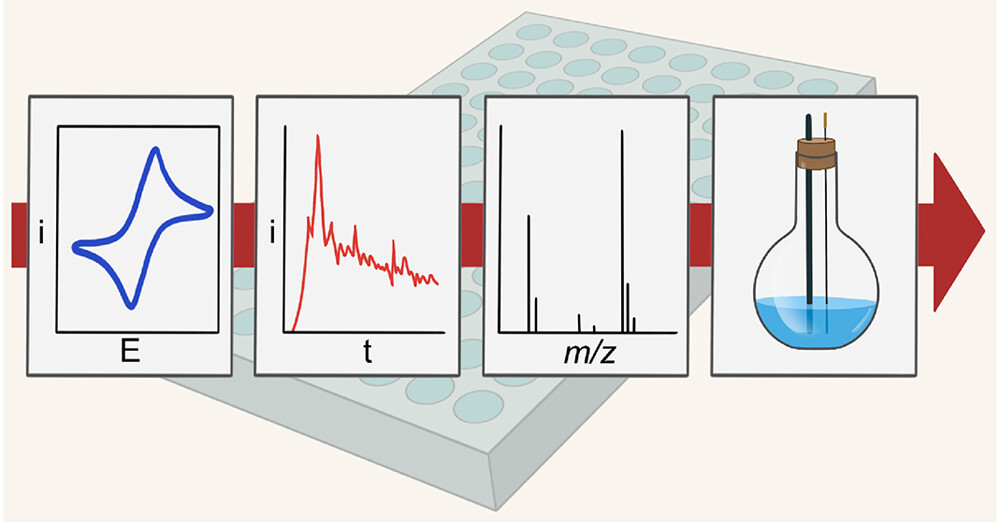
Combinatorial electrochemistry has great promise for accelerated reaction screening, organic synthesis, and catalysis. Recently, we described a new high-throughput electrochemistry platform, colloquially named “Legion”. Legion fits the footprint of a 96-well microtiter plate with simultaneous individual control over all 96 electrochemical cells. Here, we demonstrate the versatility of Legion when coupled with high-throughput mass spectrometry (MS) for electrosynthetic product screening and quantitation. Electrosynthesis of benzophenone azine was selected as a model reaction and was arrayed and optimized using a combination of Legion and nanoelectrospray ionization MS. The combination of high-throughput synthesis with Legion and analysis via MS proves a compelling strategy for accelerating reaction discovery and optimization in electro-organic synthesis.
Advion Interchim Scientific® Triversa® NanoMate® (Advion, Ithaca, NY) was utilized.
Abstract
Most spiders deploy paralytic venom for prey capture, but adults of the Nurse´s thorn finger (Cheiracanthium punctorium) instead produce a predominantly defensive venom to safeguard their offspring. Here, we characterize the molecular repertoire of C. punctorium venom to shed light on its evolutionary history. Unlike venom in other spiders, C. punctorium venom mostly comprises neurotoxic double-domain neurotoxin 19 family (CSTX) peptides and enzymes, such as phospholipase A2 (PLA2). Comparative venomics in four spiders representing two infraorders shows that CSTXs arise following the mygalomorph–araneomorph split ~300 mya by means of ancestral gene duplication and functional specialization. A gene fusion event then appeared to have merged CSTXs from two distinct clades to form the double-domain toxin. PLA2 proteins are convergently recruited to C. punctorium to fulfil a defensive function and are strikingly similar to proalgesic PLA2 proteins in bee venom. These complex, multimodal molecular innovations in venom systems highlight nature’s tendency to use the same molecular solutions for similar ecological challenges across diverse animal lineages.
Advion Interchim Scientific® Triversa® NanoMate® (Advion, Ithaca, NY) was utilized.
Abstract
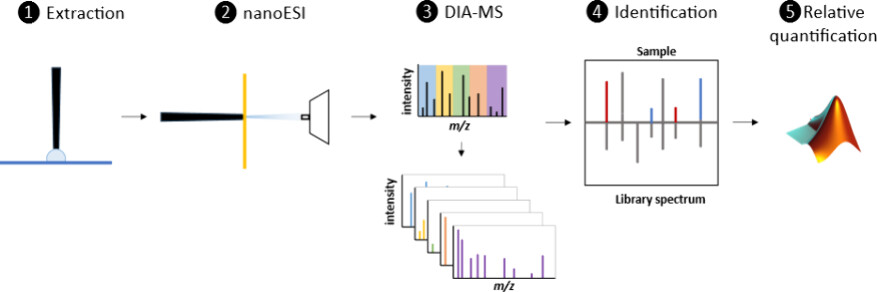
Biomaterials play an important role in medicine from contact lenses to joint replacements. High-throughput screening coupled with machine learning has identified synthetic polymers that prevent bacterial biofilm formation, prevent fungal cell attachment, control immune cell attachment and phenotype, or direct stem cell fate. In-vitro preadsorption of proteins from culture medium plays a pivotal role in controlling cell response. However, there is a paucity of studies on the screening of protein adsorption into material libraries. Here, we show how quantitative analysis of protein adsorption on a 208-member polymer microarray can be achieved using liquid extraction surface analysis, combined with an adaptation of the droplet microarray (DMA) approach and tandem mass spectrometry (LESA-MS/MS) for protein identification. This study uses a fully defined cell culture medium containing only four proteins (Essential 8) to demonstrate the feasibility of the analysis approach. Our findings show that we can generate quantitative and predictive machine learning models of protein adsorption that elucidate key polymer features that describe the relationship between surface chemistry and protein adsorption. This information is of use for the rational design of new materials with bespoke protein attachment properties for biomaterials, medical devices, or in vitro compound screening.
Advion Interchim Scientific® Triversa® NanoMate® (Advion, Ithaca, NY) was utilized.
Abstract
The Arabian saw-scaled viper (Echis coloratus) is among the snakes of highest medical relevance in the Middle East and North Africa. However, to date, its venom has been investigated in a very limited number of studies, and much remains unknown regarding its compositional and functional properties. By integrating proteotranscriptomics with bioactivity profiling, we present a comprehensive transcriptome-level catalogue of E. coloratus venom components and their associated biological activities. Our analysis identified 183 venom components belonging to 17 distinct protein families. Relative toxin abundances revealed that 92% of the venom proteome is composed of C-type lectin and C-type lectin-related protein (CTL), L-amino acid oxidase (LAAO), phospholipase A2 (PLA2), snake venom serine protease (SVSP), and snake venom metalloproteinase (SVMP), with CTL and PLA2 alone accounting for 73% of the total composition. Bioassays targeting key aspects of viperid envenomation demonstrated potent protease and PLA2 activity in a concentration-dependent manner. In contrast, Factor Xa-like, plasmin-like, and haemolytic activities were negligible. Marked cytotoxicity was observed at the highest concentration tested (i.e., 25 μg/ml) in the mammalian cell lines MDCK II and Calu-3, whereas cytotoxic effects were minimal at lower concentrations. These findings highlight the complexity and potency of E. coloratus venom, and provide a valuable foundation for improving our understanding of envenomation caused by this species.
Advion Interchim Scientific® Triversa® NanoMate® (Advion, Ithaca, NY) was utilized.