
Evaluation of a compact mass spectrometer for routine support of pharmaceutical chemistry

Bu X1, Yang J2, Gong X2, Welch CJ3

1Analytical Chemistry, Merck Research Laboratories, Rahway, NJ 07065, USA
2Analytical Chemistry, Merck Research Laboratories, Rahway, NJ 07065, USA
3Analytical Chemistry, Merck Research Laboratories, Rahway, NJ 07065, USA

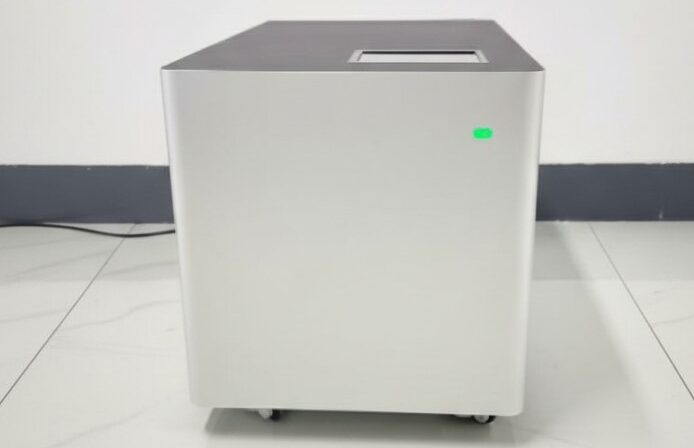
The suitability of a recently introduced inexpensive, compact mass spectrometer detector is evaluated for supporting pharmaceutical chemistry investigations. While high performance/high cost MS detectors dominate the marketplace, there is growing recognition of the need for a small, inexpensive MS detector with reduced capabilities for supporting synthetic chemistry investigations, where reduced sensitivity and unit mass resolution are often suitable for solving routine problems. In this study, the fundamental performance characteristics of the recently introduced Advion compact mass spectrometer were evaluated, investigating the use of the instrument for routine product and impurity identification, reaction monitoring, evaluation of potential genotoxic impurities and study of high molecular weight biomolecules. In general, the results of the evaluation show this compact and inexpensive mass spectrometer to be well suited for providing reliable support for pharmaceutical chemistry investigations, with sub-nanogram limit of detection and impurity identification below 0.1% being possible in some instance.
Latest Peer-Reviewed Publication

Machine-assisted synthesis of modulators of the histone reader BRD9 using flow methods of chemistry and frontal affinity chromatography

Lucie Guetzoyan,a Richard J. Ingham,a Nikzad Nikbin,a Julien Rossignol,a Michael Wolling,a Mark Baumert,b Nicola A. Burgess-Brown,c Claire M. Strain- Damerell,c Leela Shrestha,c Paul E. Brennan,c Oleg Fedorov,c Stefan Knappc and Steven V. Ley*a

aInnovative Technology Centre, Department of Chemistry, University of Cambridge, Lensfield Road, CB2 1EW, UK.

bAdvion Ltd, Harlow Enterprise Hub, Edinburgh Way, Harlow, Essex, CM20 2NQ, UK cStructural Genomics Consortium and Target Discovery Institute, Nuffield Department of Medicine, University of Oxford, NDM Research Building, Roosevelt Drive, Oxford, OX3 7FZ, UK

A combination of conventional organic synthesis, remotely monitored flow synthesis and bioassay platforms, were used for the evaluation of novel inhibitors targeting bromodomains outside the wellstudied bromodomain and extra terminal (BET) family, here exemplified by activity measurements on the bromodomain of BRD9 protein, a component of some tissue-specific SWi/SNF chromatin remodelling complexes. The Frontal Affinity Chromatography combined with Mass Spectrometry (FAC-MS) method proved to be reliable and results correlated well with an independent thermal shift assay.