Q: WHAT IS THE FOCUS OF YOUR LABS RESEARCH?
A: The laboratory is split 50/50 between proteomics and lipidomics research. While working on protein analysis, such as identifying protein interaction networks or characterizing the proteomes of organisms that are related very distantly to organisms with sequenced genomes, we also attempt to better quantify the lipidome of various organelles, cells and tissues.
Q: WHAT ARE YOUR PRIMARY GOALS?
A: In lipidomics, we forge the alliance with developmental biology. The primary goal of the group is to combine lipidomics with developmental biology. As organisms grow and develop from a single cell, newly differentiated tissues require their own unique membrane lipid composition. We hope to characterize these tailored changes to better understand how inherited defects in lipid metabolism cause disease. We are equally interested in lipidomes of membrane microdomains and the biological significance of its remarkable complexity.
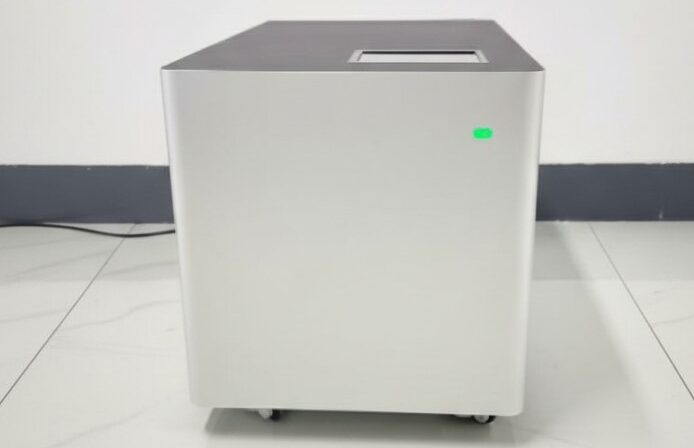
Q: WHY DID YOU INCORPORATE THE TRIVERSA NANOMATE® INTO YOUR LABORATORY?
A: We had a need for automated nanoflow direct-infusion capabilities. Shotgun lipidomics relies on low and stable flow rates, and the TriVersa NanoMate® has this demonstrated ability. We have purchased three additional instruments because they allow us to rapidly switch between lipids and proteomic analysis.
Q: DO YOU HAVE ANY PUBLICATIONS OF PRESENTATIONS USING THE TRIVERSA NANOMATE®?
Publication Highlight
2021: Hormone-Sensitive Lipase Couples Intergenerational Sterol Metabolism to Reproductive Success
Christoph Heier Is a corresponding author , Oskar Knittelfelder, Harald F Hofbauer, Wolfgang Mende, Ingrid Pörnbacher, Laura Schiller, Gabriele Schoiswohl, Hao Xie, Sebastian Grönke, Andrej Shevchenko, Ronald P Kühnlein
Hormone-sensitive lipase (Hsl) was identified as an ancestral regulator of SE degradation, which improves intergenerational sterol transfer and reproductive success in flies.
Other Publications:
- Knittelfelder, O., Prince, E., Sales, S., Fritzsche, E., Woehner, T., Brankatschk, M., Shevchenko, A. (2020) Sterols as dietary markers for Drosophila melanogaster. BBA – Molecular and Cell Biology of Lipids, 1865 (7), 1388-1981. DOI: 10.1016/j.bbalip.2020.158683
- Trautenberg, L.C., Knittelfelder, O., Hofmann, C., Shevchenko, A., Brankatschk, M., Prince, E. (2020) How to use the development of individual Drosophila larvae as a metabolic sensor. Journal of Insect Biology, 126, 0022-1910. DOI: 10.1016/j.jinsphys.2020.104095
- Wang, Y., Hinz, S., Uckermann, O., Hoenscheid, P., von Schoenfels, W., Burmesiter, G., Hendricks, A., Ackerman, J.M., Baretton, G.B., Hampe, J., Brosch, M., Schafmayer, C., Shevchenko, A., Seissig, S. (2020) Shotgun lipidomics-based characterization of the landscape of lipid metabolism in colorectal cancer. BBA – Molecular and Cell Biology of Lipids, 1865 (3), 1388-1981. DOI: 10.1016/j.bbalip.2019.158579
- Finkelstein, S. Gospe III, S.M., Schuhmann, K., Shevkenko, A., Arshavsky, V.M., Lobanova, E.S. (2020) Phophoinositide profile of the mouse retina. Cells 9(6), 1417. DOI: 10.3390/cells9061417
- Brankatschk, M., Gutmann, T., Knittelfelder, O., Palladini, A., Prince, E., Grzybek, M., Brankatschk, B., Shevchenko, A., Coskun, U., Eaton, S. (2018) A temperature-dependent switch in feeding preference improves drosphila development and survival in the cold. Developmental Cell, 46, 6, 781-793.e4. DOI: 10.1016/j.devcel.2018.05.028
- Fernandez, C., Sandin, M., Sampaio, J.L., Almgren, P., Narkiewicz, K., Hoffmann, M., Hedner, T., Wahlstrand, B., Simons, K., Shevchenko, A., James, P., Melander, O. (2013) Plasma lipid composition and risk of developing cardiovascular disease. PLOS One. DOI: 10.1371/journal.pone.0071846
- Ghosh, A., Kling, T., Snaidero, N., Sampaio, J.L., Shevchenko, A., Gras, H., Geurten, B., Goepfert, M.C., Schulz, J.B., Voigt, A., Simons, M. (2013) A global in vivo drosophila RNAi screen identifies a key role of ceramide phosphothanolamine for glial ensheathment of axons. PLOS Genetics. DOI: 10.1371/journal.pgen.1003980
- Schuhmann, K., Almeida, R., Baumert, M., Herzog, R., Bornstein, S.R. and Shevchenko, A. (2012) Shotgun lipidomics on a LTQ Orbitrap mass spectrometer by successive switching between acquisition polarity modes. J. Mass. Spectrom., 47: 96-104. DOI: 10.1002/jms.2031
- Carvalho, M., Sampaio, J.L., Palm, W., Brankatschk, M., Eaton, S., Shevchenko, A. (2012) Effects of diet and development on the Drosophila lipidome. Mol Syst Biol, 8:600. DOI: 10.1038/msb.2012.29
- Luerschner, L. Richter, D., Hannibal-Bach, H.K., Gaebler, A., Shevchenko, A., Ejsing, C.S., Thiele, C. (2012) Exogenous ether lipids predominantly target mitochondria. PLOS ONE. DOI: 10.1371/journal.pone.0031342
- Sampaio, J.L., Gerl, M.J., Klose, C., Ejsing, C.S., Beug, H., Simons, K., Shevchenko, A. (2011) Membrane lipidome of an epithelial cell line. PNAS, 108 (5), 1903-1907. DOI: 10.1073/pnas.1019267108
- Ejsing, C.S., Sampaio, J.L., Surendranath, V., Duchoslav, E., Ekroos, K., Klemm, R.W., Simons, K., Shevchenko, A. (2009) Global analysis of the yeast lipidome by quantitative shotgun mass spectrometry. PNAS, 106 (7), 2136-2141. DOI: 10.1073/pnas.0811700106