Published by the International Journal of Mass Spectrometry
Native liquid extraction surface analysis (LESA) mass spectrometry enables the direct sampling of protein complexes from a solid surface. We have previously demonstrated native LESA mass spectrometry of holomyoglobin (~17 kDa) from glass slides and tetrameric haemoglobin (~64 kDa) from dried blood spots and thin tissue sections. Here, we further explore the capabilities of this
emerging technique by investigating a range of proteins which exist in various oligomeric states in vivo.
Victor A.Mikhailov, Rian L.Griffiths, Helen J.Cooper,
Liquid Extraction Surface Analysis for Native Mass Spectrometry: Protein
Complexes and Ligand Binding, International Journal of Mass Spectrometry
http://dx.doi.org/10.1016/j.ijms.2016.09.011
The Montclair University team utilizes the Advion CMS in their undergraduate lab. Essential in the research-focused curriculum, the team was able to purchase the cost effective, small-footprint system to grow their lab capabilities. They later added an APCI module for their growing needs.
The Advion deconvolution algorithm employs a combination of predictive charge envelope generation, overlap calculation with actual MS data acquired utilizing a maximum entropy goodness of fit approach followed by artifact removal through determination of peak significance. This novel approach allows for a rapid deconvolution over a wide mass range in seconds. It also allows a neutral mass output where the absolute signal intensity is directly correlated to the MS raw data signal intensity and analyte concentration in solution.

Q: WHAT IS THE FOCUS OF YOUR LAB’S RESEARCH?
A: The lab’s research focus is time-resolved crystallography of proteins. Many of the catalytic processes involved occur too rapidly for us to study effectively. Therefore, we use our synthetic chemistry lab to prepare photosensitive compounds called photocages which can be incorporated into the proteins to inhibit or hinder reactions. Because they are photosensitive, they enable us to control reaction speed, making the study of these catalytic processes possible.
Q: WHAT WAS YOUR PREVIOUS WORK FLOW OR CHALLENGE?
A: Previously I was working in pure organic chemistry and other related disciplines such as supramolecular chemistry and organocatalysis. So it was quite challenging to move into the crystallography field in a campus like Deutsches Elektronen-Synchrotron (DESY) where there is almost no organic chemistry research undertaken.
Q: WHY DID YOU INCORPORATE THE EXPRESSION CMS INTO YOUR LABORATORY?
A: On the DESY campus there’s no chemistry department and, as a consequence, no instrumentation for the qualitative nor quantitative determination of organic compounds. With the Advion compact mass spectrometer we are now able to follow the process of most of our reactions which greatly facilitates our research.
Q: TO WHOM WOULD YOU RECOMMEND THE EXPRESSION CMS?
A: Organic chemists who are working continuously in the lab for the quick and easy determination of small molecules.

Q: WHAT IS THE FOCUS OF YOUR LAB’S RESEARCH?
A: In our Department of Medicinal Chemistry we have focus on the synthesis of novel molecules with biological activity. We synthesize molecules of natural origin, peptides and heterocyclic compounds. As integral part of the department’s work we also do drug analysis.
Q: WHAT WAS YOUR PREVIOUS WORK FLOW OR CHALLENGES?
A: The modern Faculty of Pharmacy provides state-of-the art analytical techniques. We have a 400 MHz NMR in our department and access to 600 MHz and 800 MHz NMRs in the Infrastructural Centre. Furthermore, we routinely use FT IR, DAD HPLC. At one point biggest bottleneck was MS, as we had access to HRMS, but we did not have MS in our department for routinely use in synthesis and analytical procedures.
Q: WHY DID YOU INCORPORATE THE EXPRESSION® CMS INTO YOUR LABORATORY?
A: We thought that a robust, easy to use MS would be most useful in our laboratory to make our work faster and most efficient. Versatile use, simple use of various ion sources, and direct application of samples from TLC or use of dissolved samples, were possibilities which persuaded us.
Q: WHO WOULD YOU RECOMMEND TO PURCHASE THE EXPRESSION® CMS?
A: We would recommend the expression® CMS to every medicinal chemistry department, who would use MS in a daily routine from undergraduate students to post-docs. Doing MS analysis is now a common and integral part of our work as well as doing TLC-MS-coupling with the Plate Express™. It is an excellent way for entry level to mass spectrometry, because of simple use, robustness and good results of analysis.

Q: WHAT IS THE FOCUS OF YOUR LAB’S RESEARCH?
A: My group are actively researching the application of mass spectrometry to a range of problems in both chemical and biomedical science. In particular we are involved in the application of mass spectrometry based proteomics for label free quantitation of proteins from human tissue samples and also in the identification of trace analytes from environmental samples. We are also investigating the synthesis of novel co-polymeric monolithic phases for sample extraction and separation.
Q: WHAT WAS YOUR PREVIOUS WORK FLOW OR CHALLENGES?
A: The Chemistry Department at Hull have long recognised the need for practical training on a wide range of chemical instrumentation. In particular we recognise the requirement from many companies in the pharmaceutical and fine chemical sectors for practical training in GC/MS and LC/MS. The Advion expressionL compact mass spectromater (CMS) was purchased to provide such training at an undergraduate level and has been incorporated into the range of instrumental analysis practicals for final year students. The expressionL CMS fits tidily on the bench-top next to the HPLC system and gives students the chance experience at first hand the use of LCMS as an analytical technique. The ease of use and robust nature of the system means that the expressionL CMS lends itself to the undergraduate laboratory where users will not be experts in mass spectrometry at this point in their careers.
Q: WHY DID YOU INCORPORATE THE EXPRESSION CMS INTO YOUR LABORATORY?
A: We use the expressionL CMS to give undergraduate students practical experience of using LC/MS to prepare and analyse a ‘mock’ urine sample. The sample has to be prepared by adding the internal standard and extracting the analytes using Solid Phase Extraction (SPE) to obtain a sample suitable for LC/MS analysis. The aim is to identify and quantify the compounds found in the sample by reference to the internal standard added. The HPLC separation is a rapid 10 min gradient elution and the ability to incorporate the data from the UV detector into the MS data provides an additional benefit. Purchasing the expression L CMS has allowed us to provide practical training in LC/MS for our undergraduate students at a time when prospective employers are actively seeking such skills.
A recent development in mass spectrometry is the design of smaller sized MS systems with full analytical capability (compact mass spectrometry, CMS). CMS systems with fragmentation analysis are very cost eff�ective analysis solutions and ideally suited for reaction and quality control in SPPS including detailed product characterization3. Here, we evaluate the utility of a system comprised of an automated peptide synthesizer, Prelude X
(Protein Technologies Inc.) and the LC/CMS analysis system expression-L (Advion Inc.) based on two peptides selected for their known synthetic challenge.

Q: WHAT IS THE FOCUS OF YOUR LAB’S RESEARCH?
A: As part of the Archibald research group our main research area is developing radiopharmaceutical compounds for medical imaging and targeted protein binding molecules for therapeutic applications.
Specifically, I am working on synthesising radiotracers to target the CXCR4 chemokine receptor which has been shown to be overexpressed in 23 different types of cancer.
Q: WHY DID YOU INCORPORATE THE EXPRESSION CMS INTO YOUR LABORATORY?
A: The expression CMS was purchased as we are a large research group and it is more cost and time effective to be able to carry out rapid MS analysis in situ for some sample and to use the University’s analytical service only for more complex analyses that are less time sensitive. The expression CMS fits nicely onto the bench top, performs all the functions needed for general day to day use, and is easy to use and maintain.
Q: HOW DO YOU USE THE EXPRESSION CMS?
A: We use the expression CMS to monitor chemical reactions, check for by-products and gauge the purity of our products. We have the TLC-MS interface which is extremely useful in identifying compounds straight from the TLC plate. Personally, I have used the expression CMS to examine fractions from a column to identify exactly when my product was being eluted, which would not have been possible previously. Purchasing the expression CMS has undoubtedly saved our group a great deal of time and has helped advance our research.
With the emergence of new protein therapeutics, including biosimilars, biobetters and ADCs, peptide mapping by LC/MS is becoming more commonly used for the identification of post-translational modifications (PTMs), glycosylation, and conjugation sites, as well as primary sequence confirmation.
The purpose of this study is to provide guidelines for developing optimal LC running conditions with Aeris™ PEPTIDE core-shell HPLC/UHPLC columns and determine the feasibility of transferring a method developed on UV to MS simply by adjusting the acidic modifier in the mobile phase.
With decades of mass spectrometry and chemistry expertise, Advion Interchim Scientific has produced a family of compact mass spectrometers designed for the chemist. The affordability, small size and ease of use make them ideal for use directly at the chemist’s bench, giving immediate answers and informed decisions instead of waiting.
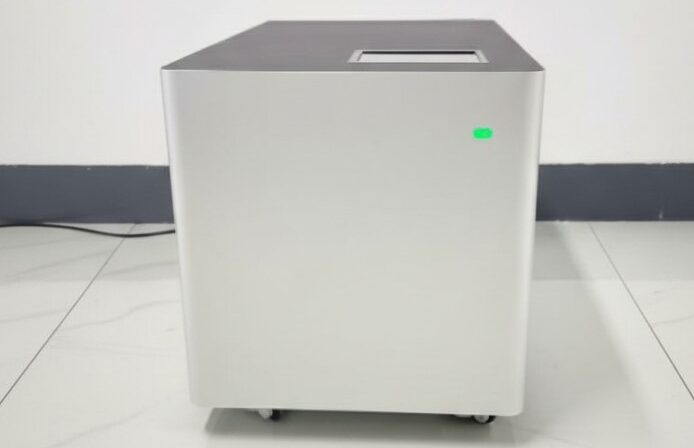
The Advion Interchim Scientific expression® compact mass spectrometer (CMS) is a fast and easy analytical tool for the organic chemist. Ideal for fast reaction monitoring, the expression® CMS features a single quadrupole that can adapt to multiple ionization sources in seconds, including both ESI and APCI. The mass spectrometer works in a variety of applications, including food and beverage, pharmaceutical, biomedical, peptides and proteins, drug discovery and more. The expression® CMS offers a variety of novel sampling techniques, including:
- Direct mass analysis of TLC plates in 30 seconds at the push of a button with Plate Express™
- One-touch analysis of solids and liquid samples with the ASAP® probe
- LC/CMS
- Many more options and configurations to suit your needs
Learn more about the different sample techniques available with the expression® CMS, including fast assay methods for liquids, solids, gases, and even air-sensitive compounds.
Fill out the form to download the full expression® CMS brochure now.