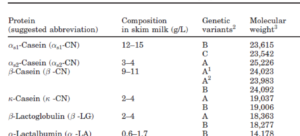
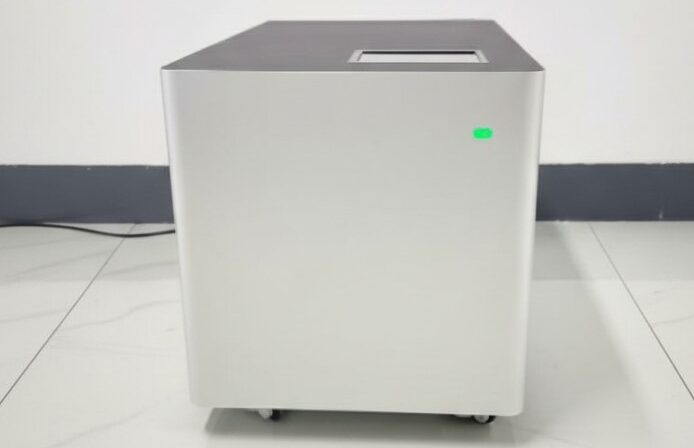
In this application note, the Advion Interchim Scientific® AVANT™ UHPLC/CMS system is used to analyze casein proteins in whole milk extract to separate and detect β-casein-B, -A1, and -A2, as well as K-casein and αs1-casein variants. This method is also suitable for a quick, relative quantitation of the β-casein-B, -A1, and -A2 variants in standards of β-casein.
A new type of mass spectrum: the Delta Spectrum (ΔS). The patented ΔS is able to look beyond chemical noise and automatically detect even the smallest peaks without knowing the m/z.
How to easily find adducts, dimers, fragments, side-reactions and other unexpected compounds at the click of a button, in real-time or with post-processing.
How to use Peak Express software to highlight minor components in complex mixtures and dirty matrices, and can give you the ability to control mass-directed purification without providing the compound mass.
How to easily acquire XIC-quality data while scanning the entire mass range, allowing Peak Express™ to tell you the m/z.This webinar was featured by Lab Manager’s Tech Trends webinar series, “Innovations in Mass Spectrometry.”
In this application note, a simple and cost-effective SIM LC/MS analytical approach employing the Advion expression Compact Mass Spectrometer (CMS) is described for the quantitation of 25-hydroxyvitamin D2 and D3 in human serum.
The evolution of supercritical fluid chromatography (SFC) instrumentation, improved detection capability, and expanded modifier range has led to extending the reach of SFC to the analysis of a broader spectrum of analytes beyond enantioselective separations. However, preparative SFC has yet to see the same technological revitalization, especially in regards to the purification of highly polar analytes. Enhanced fluidity liquid chromatography (EFLC) has been demonstrated as one of the ways to extend the applicable range of SFC instrumentation to highly polar analytes such as proteins, carbohydrates, and nucleotides. Despite recent applications of EFLC for challenging mixtures of hydrophilic metabolites and analogs, its viability in preparative purification, which is of great importance to the pharmaceutical industry, remains unknown. Herein, multiple chromatographic parameters that are critical to achieve feasible EFLC purification methods were investigated, including system pressure as a function of modifier composition (for several MeOH:H2O ratios), effect of diluent injection conditions on peak shape, and optimization of mass load with diluent composition. The usage of 50% acetonitrile or methanol diluents provided the most volumetric loading capacity. In the case of sucrose, leveraging higher analyte solubility in water proved to be more favorable than the volumetric loading capacity of diluents with higher organic content. In fact, an 80 mg injection of sucrose was possible on a 2 cm preparative HILIC column with minimal peak shape degradation. The combined information led to the successful demonstration of EFLC for the preparative separation of sugars using readily available MS-directed SFC instrumentation.
Reaction monitoring is a key aspect in a range of chemistry environments from chemical synthesis to drug discovery to understanding natural products to protein synthesis. Understanding the optimal time to quench a reaction for maximum yield, as well as monitoring a reaction in real-time is vital to many medicinal and synthetic organic chemists. Advion Interchim Scientific’s expression® CMS was developed with the chemist in mind to optimize their workflow directly at the bench. It is an easy-to-use and maintain single quadrupole detector that integrates with the industry’s broadest range of innovative sampling techniques from direct probe analysis to ultra-high performance liquid chromatography. Users can rapidly switch between the many different sampling techniques required throughout the chemist’s workflow.
We are the Institute for Therapeutics Discovery & Development. One of our main research core’s goals is the synthesis of biologically active small molecules with the additional goal of training the next generation of scientists through the Department of Medicinal Chemistry’s graduate student program. Our projects focus areas include contraception, cancer, infectious disease, and Alzheimer’s.
Q: WHAT WAS YOUR PREVIOUS WORKFLOW OR CHALLENGES?
A major headache for any synthetic chemist is the identification of the desired product when a mixture is obtained from a reaction. In the past, we would typically run a flash chromatography column, isolate spots of potential interest, concentrate them, and take 1H NMR, sometimes having to go back to column fractions as many as 4 times to analyze new spots if the first wasn’t desired product.
Q: WHY DID YOU INCORPORATE THE expression® CMS INTO YOUR LABORATORY?
Advion’s TLC–CMS system has streamlined our purification and analytical process significantly. What once took several hours to days to complete, we can now accomplish in as a little as 60 seconds. The Data Express software is also very easy to work with and has been quite useful in identifying adducts of our compounds.
Q: WHO WOULD YOU RECOMMEND TO PURCHASE THE expression® CMS?
We have been extremely happy with our Advion system and predict that it will quickly become a workhorse in any synthetic organic or medicinal chemistry laboratory.
University of Naples Federico II, Hospital Cardarelli, Coop. Samnium Medica, UCCP
Abstract
Atherosclerotic cardiovascular diseases are preferential targets of healthy diet and preventive medicine partially through strategies to improve lipid profile and counteract oxidative metabolites. Ninety individuals with cardiovascular disease (CVD) risk factors were randomized (1:1:1 ratio) to three arms, according to a four-week run-in, eight-week intervention, and four-week follow up study, testing the effects of a lactofermented Annurca apple puree (lfAAP), compared to unfermented apple puree (AAP) or probiotic alone (LAB) on plasma lipid profile and trimethylamine-N-oxide (TMAO) levels. By comparing the treatments, data indicated for the subjects tested with lfAAP a higher variation of the following serum parameters, in respect to the other treatment groups: high density lipoprotein cholesterol (HDL-C), +61.8% (p = 0.0095); and TMAO levels, −63.1% (p = 0.0042). The present study would suggest lfAAP as an effective functional food for beneficial control of plasma HDL-C and TMAO levels.
HPLC-DAD/ESI-MS analysis using the Advion expression® Compact Mass Spectrometer (CMS) was used to quantify TMAO in blood samples.
In this webinar, Heather Walker from Sheffield University’s plant production and protection team explains how taking a compact mass spectrometer from the lab to the field helped optimise the team’s research.
The webinar highlights the advantages of mobile mass spectrometry, and introduces a mobile mass spec vehicle that has been outfitted to optimize time in the field without sacrificing results for real-time decision making about sampling.
During this webinar you will learn:
about fast and easy sample techniques available with compact mass spectrometry, including direct probe for liquids and solids, and a volatile headspace analysis tool – both with no sample preparation required
how instant data can be obtained to provide real-time decision making, allowing for smaller sample sizes to optimise reproducibility – without the need to oversample with the intent of bringing samples for off-site lab testing
how the metabolic profile of wheat can be measured via compact mass spectrometry, highlighting the success of the technology in the food and ingredients testing industry
This webinar is brought in association with Advion and will feature presentations from Advion’s scientific founder Jack Henion and Sheffield University’s Heather Walker.
J. S. Hanas, J. R. Hocker, G. Ramajayam, V. Prabhakaran, V. Rajshekhar, A. Oommen, J. J. Manoj, M. P. Anderson, D. A. Drevets, H. Carabin
Neurocysticercosis is associated with epilepsy in pig-raising communities with poor sanitation. Current internationally recognized diagnostic guidelines for neurocysticercosis rely on brain imaging, a technology that is frequently not available or not accessible in areas endemic for neurocysticercosis. Minimally invasive and low-cost aids for diagnosing neurocysticercosis epilepsy could improve treatment of neurocysticercosis. The goal of this study was to test the extent to which patients with neurocysticercosis epilepsy, epilepsy of unknown etiology, idiopathic headaches and among different types of neurocysticercosis lesions could be distinguished from each other based on serum mass profiling. For this, we collected sera from patients with neurocysticercosis-associated epilepsy, epilepsy of unknown etiology, recovered neurocysticercosis, and idiopathic headaches then performed binary group comparisons among them using electrospray ionization mass spectrometry. A leave one [serum sample] out cross validation procedure was employed to analyze spectral data. Sera from neurocysticercosis patients was distinguished from epilepsy of unknown etiology patients with a p-value of 10-28. This distinction was lost when samples were randomized to either group (p-value = 0.22). Similarly, binary comparisons of patients with neurocysticercosis who has different types of lesions showed that different forms of this disease were also distinguishable from one another. These results suggest neurocysticercosis epilepsy can be distinguished from epilepsy of unknown etiology based on biomolecular differences in sera detected by mass profiling.
The MS analysis was carried out using the Advion expression CMS.
Federico II University Medical School of Naples, University of Naples “Federico II”, Institute for Hospitalization and Healthcare SDN
Abstract
Objective. Sex exerts an important influence on food preferences. The Mediterranean diet (MD) is based on the common dietary characteristics and lifestyle behaviors of the Mediterranean countries. Trimethylamine N-oxide (TMAO), a marker of gut dysbiosis linked to the development of atherosclerosis and cardiovascular risk, is mainly dependent on dietary pattern and gut microbiota metabolism. The aim of this study was to evaluate the association between levels of TMAO and adherence to the MD as a function of sex.