The scientific investigation of cultural heritage objects is the only access to knowledge about long-gone, ancient societies and their cultural, technological as well as their social stage of development. In addition, the materials used by our ancestors, e.g. their textiles and the organic dyestuff to colorize these materials, allow researchers to draw some conclusions about cultural exchanges and trading routes. But in-depth knowledge about materials and dyestuff is also of highest importance for proper conservation and restauration of these materials. Specimens, however, are rare and available only in minute amounts. For their investigation preferentially non-destructive or at least minimal invasive methods have to be used.
A direct analysis using the Atmospheric Solids Analysis Probe (ASAP®) on the expression® compact mass spectrometry (CMS) technique offers a minimally invasive method allowing for a rapid and direct sampling without any sample preparation prior to analysis.
Plate Express™ is a device that provides a simple, automated means of obtaining mass spectra directly from TLC plates, creating a technique known as TLC/MS. Combined with Advion Interchim Scientific’s expression® Compact Mass Spectrometer (CMS) this becomes TLC/CMS. Using this technique chemists can quickly and confidently identify products even in complex mixtures without additional sample preparation.
This application note presents an online thin-layer chromatography (TLC)/CMS technique using the Advion Interchim Scientific expression® compact mass spectrometer (CMS) and Plate Express™ interface to provide compound structural information without sample preparation after TLC separation. A Suzuki reaction for the synthesis of 4-aminobiphenyl will be demonstrated. The online TLC/CMS technique provides rapid and accurate determination of reaction mixture components without the need for off-line TLC sample preparation procedures.
Natural products, the underlying active components and their use in traditional medicine are of increased interest in the field of pharmaceutical research. The naturally occurring active ingredients are ideal chemical starting structures to improve upon in the pharmaceutical drug development process and consequently half of all currently approved drugs in the US are based on natural products. It is therefore not surprising that natural product analysis is a field of major interest world wide. Here, we present a simple example of the added benefits of mass spectrometry in typical natural product analysis workflows based on an alcoholic extract of nutmeg.
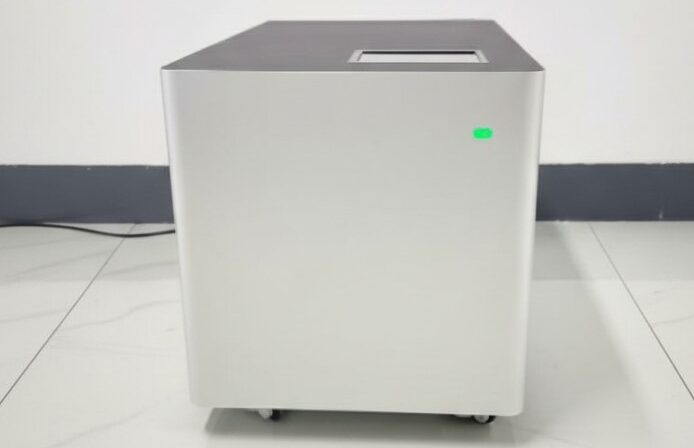
The expression compact mass spectrometer (CMS) is a novel high performance, easy-to-use single quadrupole mass spectrometer with enhanced scan speed and the ability for on-line polarity switching and in-source fragmentation.
Analysis of the active components of the cannabis sativa plant is required both for law enforcement where these compounds are illegal and also as a tool for product control and optimization in the increasing number of legal markets for cannabis plant products. Whenever simple, unequivocal and legally defensible analysis methods for the detection and quantification of plant metabolites are required, mass spectrometry is the detector of choice.
Here, we present two simple workflows for the analysis of cannabinoids such as the naturally occuring cannabinol (CBN), the psychoactive ingredient of cannabis sativa, tetrahydrocannabinol (THC) and the degradation product cannabidiol (CBD). Both TLC/FIA/CMS for qualitative detection of cannabinoids, as well as HPLC/CMS for the quantitative determination of THC demonstrate the added benefit of compact mass spectrometry in the analysis of natural products.
With decades of mass spectrometry and chemistry expertise, Advion Interchim Scientific has produced a family of compact mass spectrometers designed for the chemist. The affordability, small size and ease of use make them ideal for use directly at the chemist’s bench, giving immediate answers and informed decisions instead of waiting.
The Advion Interchim Scientific expression® compact mass spectrometer (CMS) is a fast and easy analytical tool for the organic chemist. Ideal for fast reaction monitoring, the expression® CMS features a single quadrupole that can adapt to multiple ionization sources in seconds, including both ESI and APCI. The mass spectrometer works in a variety of applications, including food and beverage, pharmaceutical, biomedical, peptides and proteins, drug discovery and more. The expression® CMS offers a variety of novel sampling techniques, including:
- Direct mass analysis of TLC plates in 30 seconds at the push of a button with Plate Express™
- One-touch analysis of solids and liquid samples with the ASAP® probe
- LC/CMS
- Many more options and configurations to suit your needs
Learn more about the different sample techniques available with the expression® CMS, including fast assay methods for liquids, solids, gases, and even air-sensitive compounds.
Fill out the form to download the full expression® CMS brochure now.
The ability to effectively screen passengers with minimal personal contact is critical. Ion mobility detectors used at many airports can be inaccurate and provide many false-positives and false-negatives. Advanced Imaging Technology (AIT) screening techniques are very useful for detecting concealed weapons and explosive devices located on passengers and/or in their belongings, however are unable to detect trace amounts of explosive residues.
The expression® Compact Mass Spectrometer (CMS) with an Atmospheric Solids Analysis Probe (ASAP®) is a high performance instrument with a small footprint that allows airports to better screen for explosive residues on passengers and their belongings.
The expression® CMS provides rapid and accurate detection with significantly reduced false-positives and false-negatives than ion mobility instruments.
Aflatoxins (B1, B2, G1, G2) produced by certain fungi (Aspergillus flavus and Aspergillus parasificus) are toxic metabolites which have been associated with various diseases, such as aflatoxicosis, in livestock, domestic animals and humans throughout the world. Many methods can be used for Aflatoxins analysis, including TLC, HPLC, immunoassay, LCMS etc. Of all the methods, the LC/MS method is considered the preferred technique because of its high selectivity and sensitivity. In this presentation, a simple, cost effective LC/CMS analytical approach is described for the determination of Aflatoxins.
Direct sample analysis is possible via an Atmospheric Solids Analysis Probe (ASAP®) combined with atmospheric pressure chemical ionization (APCI) on a compact mass spectrometer (CMS). This technique allows for the rapid investigation (<30 sec) of material suspected of containing THC/cannabinoids.
Chemists are tasked with quickly identifying compounds created, ensuring quality of products or evaluating safety. Current techniques are adequate, but not all offer speed, data quality or ease-of-use provided by the expression® Compact Mass Spectrometer (CMS). The expression® CMS with the direct analysis probe (ASAP®) offers chemists the ability to rapidly analyze solids, liquids and powders without tedious and time consuming sample preparation.